Brain Pickings

Posts Tagged ‘Sylvia Plath’

11 FEBRUARY, 2013

The Quicksand of Existence: Sylvia Plath on Life, Death, Hope, and Happiness

By:

“Life is a gentleman’s agreement to grin and paint your face gay so others will feel they are silly to be unhappy.”

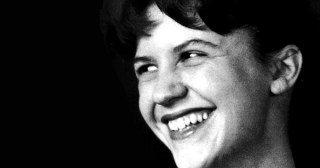
On February 11, 1963, Sylvia Plath — celebrated poet, little-known artist, “an addict of experience” — took her own life at the age of thirty. Though some have argued that Plath has been “flattened into the prototype of the mentally tormented poet, the betrayed woman, the tragic literary blonde,” and suicide is always challenging to talk about in causal terms, Plath’s private writing reveals a complex and, indeed, tormented woman whose constant struggle to understand the meaning of life took an increasingly melancholy turn.

The Unabridged Journals of Sylvia Plath (public library; UK) — the same volume that gave us the young poet’s exuberant celebration of curiosity and life — also gives us a record of her incessant oscillation between hope and hopelessness. In an entry from the summer of 1950, 18-year-old Plath adds to history’s finest private moments of everyday happiness:

‘We only begin to live when we conceive life as tragedy…’ W. B. Yeats

‘Hold to the now, the here, through which all future plunges to the past…’ James Joyce

[…]

I may never be happy, but tonight I am content. Nothing more than an empty house, the warm hazy weariness from a day spent setting strawberry runners in the sun, a glass of cool sweet milk, and a shallow dish of blueberries bathed in cream. Now I know how people can live without books, without college. When one is so tired at the end of a day one must sleep, and at the next dawn there are more strawberry runners to set, and so one goes on living, near the earth. At times like this I’d call myself a fool to ask for more…

But in the fall of that year, in a despondent and peculiarly punctuated stream-of-consciousness passage, Plath ponders:

Not to be sentimental, as I sound, but why the hell are we conditioned into the smooth strawberry-and-cream Mother-Goose-world, Alice-in-Wonderland fable, only to be broken on the wheel as we grow older and become aware of ourselves as individuals with a dull responsibility in life? … * to go to college fraternity parties where a boy buries his face in your neck or tries to rape you if he isn’t satisfied with burying his fingers in the flesh of your breast. * to learn that there are a million girls who are beautiful and each day that more leave behind the awkward teen-age stage, as you once did, to embark on the adventure of being loved and petted. * to be aware that you must compete somehow, and yet that wealth and beauty are not in your realm. … * to learn that you can’t be a revolutionary. * to learn that while you dream and believe in Utopia, you will scratch & scrabble for your daily bread in your home town and be damn glad if there’s butter on it. … * to have won $100 for writing a story and not believe that I am the one who wrote it. … * to know that millions of others are unhappy and that life is a gentleman’s agreement to grin and paint your face gay so others will feel they are silly to be unhappy, and try to catch the contagion of joy, while inside so many are dying of bitterness and unfulfillment. * to take a walk with Marcia Brown and love her for her exuberance, to catch some of it, because it’s real, and once again love life day by day, color by color, touch by touch, because you’ve got a body & mind to exercise & use it as much as you can, never mind whose [sic] got a better or worse body & mind, but stretch yours as far as you can.

Another entry bespeaks her dissonant, conflicted relationship with life and death in increasingly poetic, if heartbreaking in retrospect, language:

With me, the present is forever, and forever is always shifting, flowing, melting. This second is life. And when it is gone it is dead. But you can’t start over with each new second. You have to judge by what is dead. It’s like quicksand… hopeless from the start. A story, a picture, can renew sensation a little, but not enough, not enough. Nothing is real except the present, and already, I feel the weight of centuries smothering me. Some girl a hundred years ago once lived as I do. And she is dead. I am the present, but I know I, too, will pass. The high moment, the burning flash, come and are gone, continuous quicksand. And I don’t want to die.

But perhaps most poignant of all is this meditation on the ineffable:

There are times when a feeling of expectancy comes to me, as if something is there, beneath the surface of my understanding, waiting for me to grasp it. It is the same tantalizing sensation when you almost remember a name, but don’t quite reach it. I can feel it when I think of human beings, of the hints of evolution suggested by the removal of wisdom teeth, the narrowing of the jaw no longer needed to chew such roughage as it was accustomed to; the gradual disappearance of hair from the human body; the adjustment of the human eye to the fine print, the swift, colored motion of the twentieth century. The feeling comes, vague and nebulous, when I consider the prolonged adolesence [sic] of our species; the rites of birth, marriage and death; all the primitive, barbaric ceremonies streamlined to modern times. Almost, I think, the unreasoning, bestial purity was best. Oh, something is there, waiting for me. Perhaps someday the revelation will burst upon me and I will see the other side of this monumental grotesque joke. And then I’ll laugh. And then I’ll know what life is.

To celebrate Plath’s life and legacy, I asked my ineffably talented friend Wendy MacNaughton — whose hand-lettered drawings of Susan Sontag on art and on love you might recall — to illustrate Plath’s vortex of literary influences, in the vein of our prior Circles of Influence collaboration. Enjoy:

Donating = Loving

Bringing you (ad-free) Brain Pickings takes hundreds of hours each month. If you find any joy and stimulation here, please consider becoming a Supporting Member with a recurring monthly donation of your choosing, between a cup of tea and a good dinner:


You can also become a one-time patron with a single donation in any amount:


Brain Pickings has a free weekly newsletter. It comes out on Sundays and offers the week’s best articles. Here’s what to expect. Like? Sign up.

06 FEBRUARY, 2013

An Addict of Experience: Sylvia Plath’s Sexual Repression and Class Struggle

By:

A journey into “what compelled Plath to peek over the edge and stare into the abyss of the human psyche.”

Half a century ago this month, Sylvia Plath — celebrated poet, little-known artist, lover of the world — took her own life, leaving behind her husband Ted Hughes and their two children. In the highly anticipated new biography Mad Girl’s Love Song: Sylvia Plath and Life Before Ted (public library; UK) — titled after the exquisite Plath poemAndrew Wilson explores the poorly understood period of Plath’s life before her relationship with Hughes. Diving into the darkest corners of her diaries and letters, as well as previously unavailable archives and direct interviews with those who knew Plath, Wilson sets out to “trace the sources of her mental instabilities and examine how a range of personal, economic, and societal factors — the real disquieting muses — conspired against her.”

He writes in the introduction:

In her journal in 1950 she wrote of how she was living on the ‘edge.’ She was not alone, she added, as all of us were standing on the edge of a precipice looking down into darkness, peering into an unnerving pit below.

This book will show what compelled Plath to peek over the edge and stare into the abyss of the human psyche.

Wilson notes Plath’s chronic dissonance between repression and an insatiable hunger for life:

Plath was an addict of experience, and she could not bear the fact that young women like her were denied something so life-enhancing. In the same letter she goes on to write of her deep envy of males, anger she describes as ‘insidious, malignant, latent.’

Sex — or rather the constraints and repressions surrounding it — played a central role in Plath’s creative and psychological development. She realized, as she wrote in her journal in the autumn of 1950, she was too well brought up to disregard tradition, yet she hated boys who could express themselves sexually while she had no choice but to ‘drag’ herself from one date to the next in ‘soggy desire.’ The system, she added, disgusted her.

But Wilson tends to jump to causality a little too eagerly. As Clay Shirky poignantly pointed out about the recent tragic loss of Aaron Swartz, “suicide is not only about proximate causes.” Wilson writes:

If too much has been made of the symptoms of Plath’s mental illness, so too little attention has been paid to its possible causes. Sylvia Plath was an angry young woman born in a country and at a time that only exacerbated and intensified her fury. Not only did she feel maddened that she could not express herself sexually, she also was furious that she had not been born into a family of greater means. Her letters and journals are full of references to feeling inferior and self-conscious because of her low status. As a scholarship girl at Smith College — one of America’s top universities for women — she was surrounded by the daughters of the country’s great and the good. She peeled potatoes, chopped vegetables, and waited on tables as a way of reducing her course fees. In order to try and take the burden off her mother — who worked at Boston University’s College of Practical Arts and Letters to pay the shortfall between her daughter’s fees and her scholarship — Sylvia volunteered for extra jobs at the college and, in whatever spare time she had, she wrote poems and stories for money. If she took boys home to her family’s two-bedroom house in Wellesley, Massachusetts — where she was forced to share a room with her mother — she worried that they would see the marks and rips in the wallpaper; on occasions like these, the lights would have to be kept low so as to try and disguise the blemishes. In her first semester at Smith, in the fall of 1950, she wrote in her journal of the arduous transition period between childhood and young adulthood. To help her make sense of this new, troubling reality, she made a list of certain aspects of life that she found difficult, an inventory of notes addressed to herself that she could use to boost her confidence when it was low. One of the sections focuses on her economic position in society. She noted how she knew she would have to compete with other girls who had been born into wealthier families. The Plaths, she realized, were not only of modest means but they didn’t come from a line of well-connected intellectuals. She observed how boys from richer families would often remark, in a casual fashion, of her ‘side of town,’ and although they didn’t mean to be cruel, she felt the comments keenly.

Though I have little else in common with Plath, I too found myself a “scholarship girl” amidst “the daughters of the country’s great and the good,” dirt-poor by the standards of the Ivy League institution into which I landed from Eastern Europe, and working up to four jobs at a time to support myself. Yet while the enormity of the mental and emotional burden inflicted by this constant sense of economic inferiority couldn’t be overstated, to call it a “possible cause” of suicide — rather than something more causally neutral, like a “trigger” or “contributing factor” — is questionable at best.

Still, semantic nitpicking aside, Mad Girl’s Love Song remains rigorously researched and absolutely fascinating, with its ample footnotes alone a treasure trove of insight into Plath’s previously unexplored life.

Donating = Loving

Bringing you (ad-free) Brain Pickings takes hundreds of hours each month. If you find any joy and stimulation here, please consider becoming a Supporting Member with a recurring monthly donation of your choosing, between a cup of tea and a good dinner:


You can also become a one-time patron with a single donation in any amount:


Brain Pickings has a free weekly newsletter and people say it’s cool. It comes out on Sundays and offers the week’s best articles. Here’s what to expect. Like? Sign up.

29 OCTOBER, 2012

Sylvia Plath Reads “A Birthday Present”: A Rare 1962 Recording

By:

“I do not want much of a present, anyway, this year. / After all I am alive only by accident.”

Sylvia Plath would’ve celebrated her 80th birthday this month, had she not become one of the most heartbreaking tragedies in modern literary history. How does a creature so breathlessly and earnestly in love with the world, in love with art, and in love with love come to take her own life?

In October of 1962, mere months before her death, Plath recorded herself reading “A Birthday Present,” written the previous month and later included in her beloved poetry collection Ariel. With lines like “I do not want much of a present, anyway, this year. / After all I am alive only by accident. / I would have killed myself gladly that time any possible way,” the poem stops you dead in your tracks as you absorb the quiet catastrophe of Plath’s fate and simultaneously behold the all-too-human, universal terror that birthdays stir in all of us, that subtle but inevitable reminder of our own mortality. And yet — “sweetly, sweetly” — perhaps you’re moved to reach for, to choose, a different truth, the one 18-year-old Sylvia knew when she wrote, “I have to live my life, and it is the only one I’ll ever have.”

A Birthday Present

What is this, behind this veil, is it ugly, is it beautiful?
It is shimmering, has it breasts, has it edges?

I am sure it is unique, I am sure it is what I want.
When I am quiet at my cooking I feel it looking, I feel it thinking

‘Is this the one I am too appear for,
Is this the elect one, the one with black eye-pits and a scar?

Measuring the flour, cutting off the surplus,
Adhering to rules, to rules, to rules.

Is this the one for the annunciation?
My god, what a laugh!’

But it shimmers, it does not stop, and I think it wants me.
I would not mind if it were bones, or a pearl button.

I do not want much of a present, anyway, this year.
After all I am alive only by accident.

I would have killed myself gladly that time any possible way.
Now there are these veils, shimmering like curtains,

The diaphanous satins of a January window
White as babies’ bedding and glittering with dead breath. O ivory!

It must be a tusk there, a ghost column.
Can you not see I do not mind what it is.

Can you not give it to me?
Do not be ashamed–I do not mind if it is small.

Do not be mean, I am ready for enormity.
Let us sit down to it, one on either side, admiring the gleam,

The glaze, the mirrory variety of it.
Let us eat our last supper at it, like a hospital plate.

I know why you will not give it to me,
You are terrified

The world will go up in a shriek, and your head with it,
Bossed, brazen, an antique shield,

A marvel to your great-grandchildren.
Do not be afraid, it is not so.

I will only take it and go aside quietly.
You will not even hear me opening it, no paper crackle,

No falling ribbons, no scream at the end.
I do not think you credit me with this discretion.

If you only knew how the veils were killing my days.
To you they are only transparencies, clear air.

But my god, the clouds are like cotton.
Armies of them. They are carbon monoxide.

Sweetly, sweetly I breathe in,
Filling my veins with invisibles, with the million

Probable motes that tick the years off my life.
You are silver-suited for the occasion. O adding machine—–

Is it impossible for you to let something go and have it go whole?
Must you stamp each piece purple,

Must you kill what you can?
There is one thing I want today, and only you can give it to me.

It stands at my window, big as the sky.
It breathes from my sheets, the cold dead center

Where split lives congeal and stiffen to history.
Let it not come by the mail, finger by finger.

Let it not come by word of mouth, I should be sixty
By the time the whole of it was delivered, and to numb to use it.

Only let down the veil, the veil, the veil.
If it were death

I would admire the deep gravity of it, its timeless eyes.
I would know you were serious.

There would be a nobility then, there would be a birthday.
And the knife not carve, but enter

Pure and clean as the cry of a baby,
And the universe slide from my side.

Thanks, Natascha

Brain Pickings has a free weekly newsletter and people say it’s cool. It comes out on Sundays and offers the week’s best articles. Here’s what to expect. Like? Sign up.